Skip to content

Get Accurate Texas Roofing Code Reports Instantly

From Gulf Coast Winds to West Texas Heat

Access the most current Texas roof building codes, tailored to the address, county and ZIP code. OneClick Code delivers clear, jurisdiction-specific code requirements, storm history, and calculators (IWS, waste, ventilation) — all designed to save contractors time and money.

Group 626874

Texas Roofing Code Highlights

Permit Thresholds

  • In most Texas counties, any re‑roofing project requires a permit, especially those involving decking or structural changes.
  • Permit fees and documentation vary by jurisdiction.
  • OneClick Code delivers ZIP-based permit fee estimates instantly, removing uncertainty.

Ice & Water Shield

  • Governed by IRC R905.1.2 / R905.2.7.
  • Required in select North Texas counties susceptible to ice, snow, or freeze events.
  • Must extend 24″ beyond the warm-side wall, consistent with standard code practices.

Fire and Wind Ratings

  • Must meet IRC R905.2.4.1 and ASTM D7158 or D3161 standards.
  • Class A fire-rated shingles are commonly required statewide.
  • Coastal regions adhere to stricter wind uplift design per ASCE 7.

Ventilation & Insulation Standards

  • Codes utilize IRC R806 / Energy Code:
    • A minimum of 1 sq ft ventilation per 150–300 sq ft attic area is expected.
    • Insulation R-values vary by region, with colder areas requiring higher thermal performance.

Texas Windstorm Insurance Association (TWIA)

  • Applies to 14 Gulf Coast counties (including parts of Harris County).
    Roofing systems must be
  • TWIA‑certified to qualify for insurance in those zones.
  • Projects must use windstorm-resistant materials and approved installation methods.

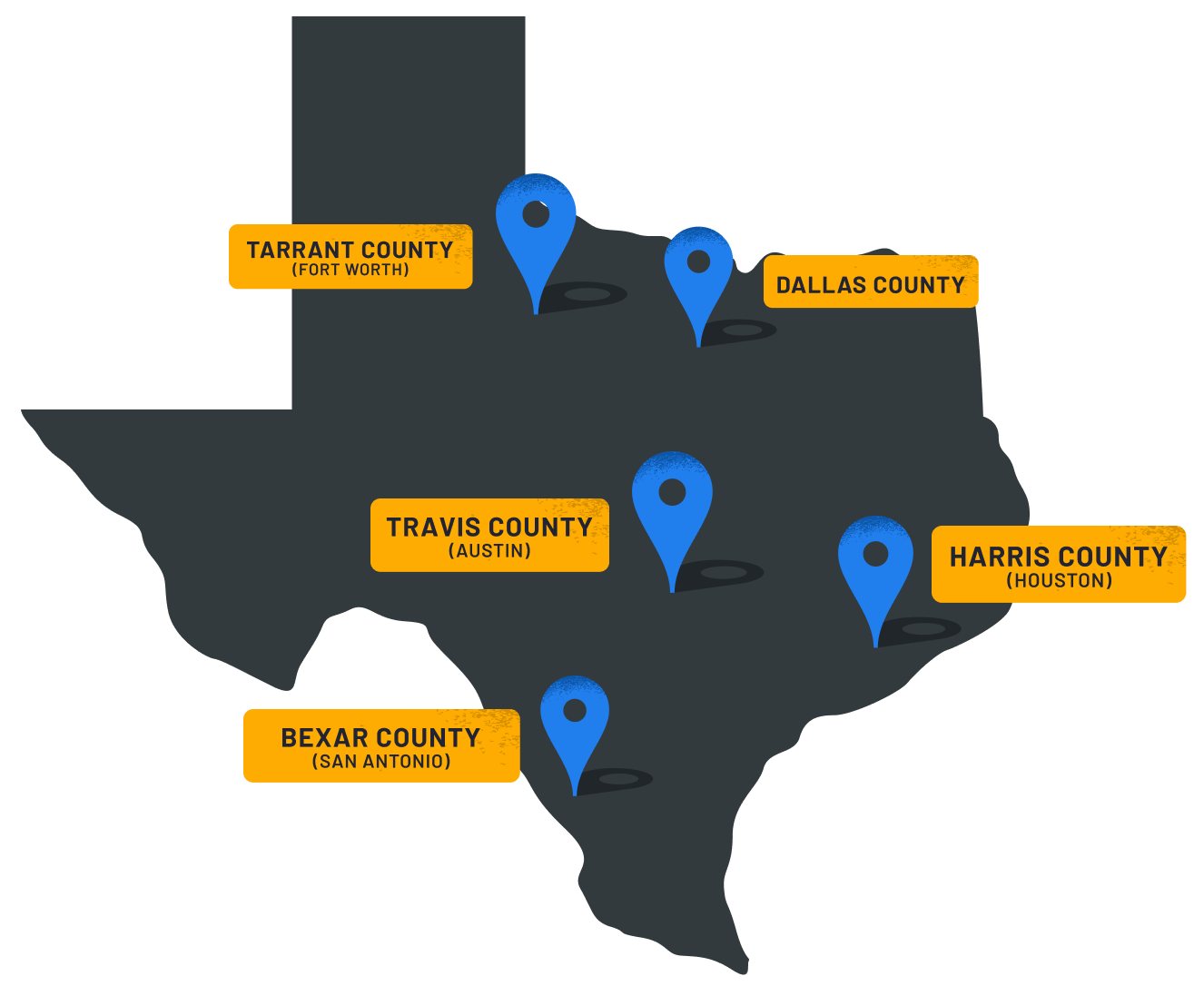
Key Texas Counties for Roofing Contractors

High-impact zones

(Source: National Weather Service, SPC, and NHC— reflected by OneClick Code reports)

  • Harris County (Houston) – Elevated hurricane and flood exposure.
  • Dallas County (Dallas) – Persistent hail threats and occasional tornadoes.
  • Tarrant County (Fort Worth) – Frequent wind and hail storms.
  • Bexar County (San Antonio) – Occasional storms and hail seasons.
  • Travis County (Austin) – Intense summer heat, hail, and wind events.
  • Coastal Counties (e.g. Galveston, Jefferson) – TWIA mandates apply, demanding wind-resistant materials.

OneClick Code provides precise county-level code and permit intelligence to power resilient roofing jobs.
Key Texas Counties for Roofing Contractors

Why Texas Roofing Codes Are Complex

Texas spans a massive geographic and climate range from hurricane-exposed coastlines to scorching desert interiors. Coastal counties demand hurricane-grade roofing, while inland areas battle hail and heat. Local code variations between counties like Harris, Dallas, and Travis add to the complexity, meaning contractors must navigate different rules depending on location.

Hurricane-Force Winds

  • Coastal areas must use roofing systems engineered for severe wind uplift following ASCE 7 standards and ASTM D7158 or D3161.
  • TWIA (Texas Windstorm Insurance Association) certification is mandatory in many hurricane‑prone counties.
Hurricane (1)

Hailstorms

  • Texas consistently records some of the highest hail damage in the US, driving code and insurance preferences for Class 4 impact‑resistant shingles.
  • Durable, hail-ready roofing systems aren’t just recommended, they’re often required.

Hailstorms_

Extreme Heat

  • Intense UV exposure and summer temperatures create a need for heat-resistant, reflective roofing materials.
  • Energy standards (IECC/IRC) push for higher thermal performance in roofing assemblies.

Heat

Varying Regional Climates

  • From humid Gulf Coast to arid West Texas, roofing codes differ widely by county.
  • OneClick Code delivers tailored, county-level code info and permit details. No more guesswork.
Frame 4

Your All-in-One Solution

OneClick Code

OneClick Code produces county‑specific roofing code reports complete with storm data, IWS/waste/ventilation calculators, permit fees, and insurance‑verified requirements like TWIA. Turn complex International Building Code (IBC) compliance into defensible estimates.
shutterstock_1970590730

Why Texas Contractors Choose OneClick

01

Accurate Estimates

Stop guessing. Base your bid on verified, current local building code regulations.

Increased accuracy in estimates and projects
02

Reduce Risk of Code Violations

Ensure your roofing meets standards across wind, hail, fire, and heat zones.

Reduced risk of code violations and fines
03

Improved Efficiency

Leverage smart calculators and built-in code citations for faster, more robust quotes.

Improved project efficiency and timelines
04

Professional Reports

Deliver defendable, well-documented roofing code data to clients and insurers.

Enhance your professional credibility and client trust.

For Texas Roofers

OneClick Code solves the dual challenges of Texas’s varied climates and volatile codes. The platform was built with contractors like you in mind, offering fast, reliable code visibility across counties.

Used by thousands of roofing contractors across Texas
texas-roofers

Frequently Asked Questions

Do I need a permit for roof repairs in Texas?

Yes, most Texas counties require a permit for any re-roofing project, particularly those involving decking, structural changes or a full replacement. Requirements and fees vary by jurisdiction and OneClick Code delivers exact details by ZIP code.

What roofing materials are required in coastal Texas counties?

In TWIA zones, which cover 14 Gulf Coast counties including parts of Harris County, roofing systems must be TWIA-certified with wind and impact-resistant materials and approved installation methods. Class A fire ratings and strict wind uplift design per ASCE 7 are standard requirements in these areas.

What are the common code-enforceable line items for Texas roofing?

Inspectors and carriers routinely verify chimney crickets, Ice & Water Shield, drip edge and valley liner on Texas roofing jobs. Getting these right is the most reliable way to avoid failed inspections and insurance claim disputes.

When is Ice & Water Shield required in Texas?

IWS is required in select North Texas counties susceptible to ice and freeze events, governed by IRC R905.1.2. Where required, it must extend 24 inches beyond the warm-side wall. OneClick Code identifies automatically whether IWS applies at a given address.

Can OneClick Code calculate permit fees for Texas projects?

Yes, OneClick Code delivers city-specific permit fees and use-tax data instantly based on ZIP code, across all Texas jurisdictions.

Get Your Texas Roofing Code Report Now

Start Your Free Trial and experience fast, defensible, and compliant roofing code reports tailored to Texas contractors.

message-popups