Get Accurate Washington, D.C. Roofing Codes and Reports Instantly
The Nation’s Capital Meets Flat-Roof & Cool-Roof Challenges
OneClick Code provides up-to-date building and roofing codes for Washington, D.C., including the 2017 DC Construction Codes based on the 2015 ICC family and the DC Energy Conservation Code’s cool-roof requirements for low-slope roofs. With local storm history and smart calculators for permit fees, ventilation, and shingle waste, D.C. contractors and estimators get everything they need to handle flat roofs, cool-roof mandates, and urban permit rules—saving time, reducing risk, and protecting profit on every project.

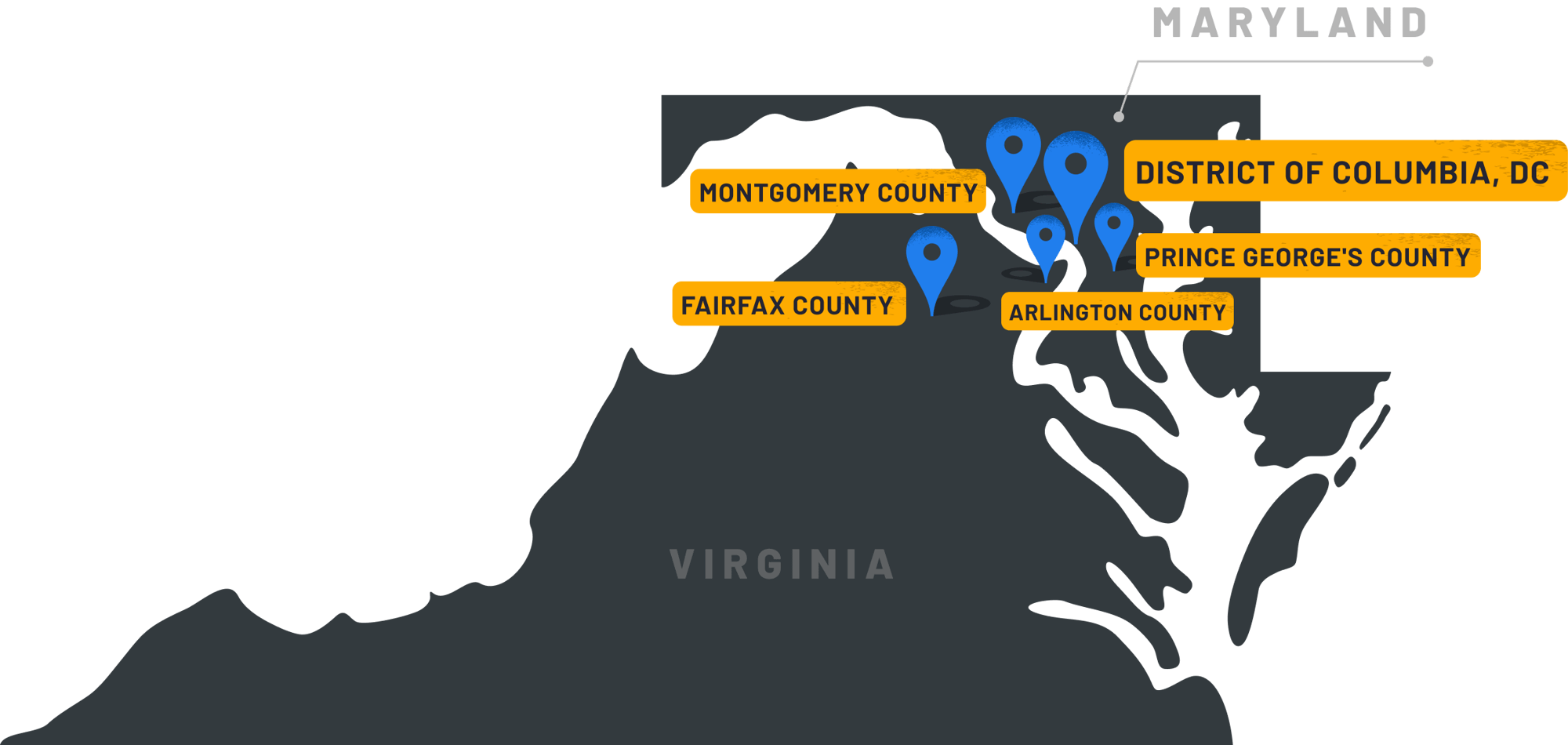
Key Washington, D.C. Metropolitan Counties/Zones for Roofing Contractors
High-impact zones
The Washington, D.C. metro area spans three code regimes (District of Columbia, Maryland, and Virginia), which means roofing rules, permits, and energy requirements can change as soon as you cross a bridge or beltway exit. For contractors bidding across the region, these counties are especially important:
- District of Columbia (D.C.): Dense urban building stock, lots of low-slope and flat roofs, and mandatory cool-roof requirements for many low-slope residential roofs under the 2017 DC Energy Conservation Code.
- Montgomery County, MD: Climate Zone 4A with strict energy-efficiency and envelope standards (including roof insulation) under adopted IECC-based energy codes and local green-building initiatives.
- Prince George’s County, MD: Follows Maryland’s statewide building and energy codes, tying roofing work to IECC-driven envelope and insulation requirements along with local permitting and inspection processes.
- Arlington County, VA: Roofing projects must comply with the Virginia Uniform Statewide Building Code plus local requirements around underlayment, ventilation, and fire-resistant materials.
- Fairfax County, VA: Most reroofs and roof replacements require permits and plan review to verify compliance with state building codes and local ordinances, impacting timelines and documentation.
OneClick Code delivers jurisdiction-specific roofing code reports across the entire D.C. metro area, so contractors can see the exact rules, energy standards, and permit expectations for any address before bidding.
Why Washington, D.C. Roofing Codes Are Complex
Custom Local Code Amendments
Washington, D.C. uses its own amended version of the IBC/IRC, known as the DC Construction Codes, which reshape standard roofing rules. Contractors must navigate District-specific requirements that differ from surrounding Maryland and Virginia jurisdictions.

Flat & Low-Slope Roof Challenges
D.C.’s housing stock is dominated by rowhouses and flat roofs, which trigger strict rules for drainage, flashing, scuppers, and roof-membrane performance. These assemblies must manage heavy rain, ponding water risks, and long-term waterproofing.
Strict Energy & Cool-Roof Standards
Under the DC Energy Conservation Code, many low-slope reroofs must meet cool-roof SRI requirements or pass alternative energy-compliance pathways. Slope, roof area replaced, and assembly type can all trigger additional energy obligations.

Permitting & Multi-Code Compliance
Most reroofs require a permit, and inspections cover structural, energy, and waterproofing standards simultaneously. This multi-layered review process means even small roofing projects must meet several code sections to pass.

Regional Multi-Jurisdiction Complexity

Your All-in-One Solution
OneClick Code
OneClick Code provides Washington, D.C. roofing code reports, covering cool-roof requirements, flat-roof standards, drainage and flashing rules, and permit fee insights; all in one unified interface. With the D.C. metro spanning three different code environments (D.C., Maryland, and Virginia), staying compliant can be challenging. OneClick Code gives contractors instant access to the exact codes adopted in each jurisdiction, along with print-ready documentation for estimates, inspections, and insurance claims.
Why Washington, D.C. Contractors Choose OneClick Code
Whether filing an insurance claim on existing buildings or tracking down the appropriate jurisdiction, this task is often painful and time-consuming. OneClick Code helps contractors reference minimum requirements for Washington, D.C. construction codes based on the latest International Building Code (IBC) standard.
Accurate Estimates
Get address-specific roofing codes and energy requirements so your bids align with D.C., Maryland, and Virginia standards from the start — no guesswork or missed scope items.

Reduce Risk of Fines
Avoid failed inspections and compliance issues by using reports built on the latest DC Construction Codes and surrounding county amendments.

Improved Estimating Efficiency
Spend minutes — not hours — gathering code information. OneClick Code delivers low-slope rules, cool-roof requirements, drainage standards, and permit insights in one simple report.

Professional Results
Share polished, inspection-ready roofing code reports with adjusters, homeowners, and building officials to build trust and close more D.C. metro roofing jobs.