The Ultimate Guide to Roofing Codes
Roofing is more than just shingles and nails; it is a complex science governed by strict legal standards. Whether you are a roofing contractor, a home inspector, or a homeowner planning a renovation, understanding roofing codes is the difference between a safe, insurable install and a costly legal nightmare.
What Are Roofing Codes?
Definition and Purpose
Roofing codes are legal construction standards that regulate how roofs must be designed, installed, and maintained.
They exist to ensure that roofs are safe, durable, weather-resistant, and compliant with insurance requirements.
Following these codes protects both the people living or working in the building and the professionals responsible for its construction.
Proper adherence reduces the risk of accidents, structural failures, and costly rework.
Where Codes Apply
Compliance isn’t optional, but the type of code changes based on the project:
-
Residential vs. Commercial: Residential homes usually follow the IRC, while commercial buildings fall under the IBC.
-
Renovations vs. New Builds: New construction must meet the latest codes, while renovations often trigger specific "tear-off" requirements.
-
Re-roofing and Repairs: Even small structural upgrades often require a permit to ensure the repair doesn't compromise the rest of the system's integrity

History and Evolution of Roofing Codes
Building codes haven't always been standardized. In the early 20th century, every city had its own quirky rules, which made it impossible for manufacturers to create universal products.
How Building Codes Evolved
The shift toward "Model Codes" began long before the modern era. Early standardization efforts saw the publication of the Uniform Plumbing Code by LACPIA (later IAPMO in 1966) and the BOCA Codes in 1950.. While plumbing standards date back as far as 1945, the major push for a unified framework led to the formation of the International Code Council (ICC) in the late 1990s. This created the IBC and IRC, driven by disaster data and the need for consistency across jurisdictions..
.png?width=1000&height=1183&name=reports%20(1).png)
National vs. Local Roofing Codes
How Codes Are Adopted Locally
Local amendments modify IBC/IRC standards based on climate, terrain, and regional factors. Builders must verify jurisdiction-specific requirements before starting a project.
.png?width=923&height=923&name=Local%20(1).png)
Why Local Variation Matters
You cannot use a "one-size-fits-all" approach.
- Miami-Dade: Has the strictest codes in the world for wind.
- California: Focuses heavily on "Cool Roof" ratings to save energy.
- The Midwest: Focuses on ventilation to prevent "Ice Damming."
- Oklahoma: Tornado and hail-prone, with code emphasis on impact-resistant roofing materials.

Residential vs. Commercial Roofing Codes
Residential and commercial roofs differ significantly in design, materials, and regulatory oversight. Understanding these differences ensures proper compliance and project success.
Structural and Functional Differences
- Commercial: low-slope, higher load, fire-rated, insulated
- Residential: pitched, lighter materials, fewer layers
Compliance and Inspection Differences
- Commercial: often require third-party engineering reviews
- Residential: inspected by local building officials
Roofing Codes and Insurance Claims
Code compliance directly affects insurance coverage. Understanding these relationships helps avoid denied claims and ensures proper coverage.
Code Upgrade Coverage
Optional insurance endorsements cover the cost to bring older roofs up to current codes, protecting homeowners and builders from claim denial.

Adjuster and Claim Implications
Insurance adjusters may deny claims if pre-loss roofs were not code-compliant. Post-loss repairs must meet current standards, even if the old roof was built under previous codes.
Regional Roofing Code Examples
Roofing requirements vary widely by region due to environmental risks. These examples highlight how local conditions impact compliance.
Hurricane-Prone Areas
-
Miami-Dade NOA requirements
-
High-wind nailing patterns
-
Peel-and-stick underlayment
.png?width=831&height=831&name=Hurricane%20(1).png)
Snow Load and Ice Barrier Zones
-
Ice and water shield at eaves
-
Structural adjustments for heavy snow
Wildfire Zones
-
California Title 24 energy and fire codes
-
Class A fire-rated materials

Common Roofing Code Violations
Even experienced contractors make mistakes. Being aware of common violations helps prevent inspections failures and costly rework.
Top Mistakes Contractors Make
-
Incorrect shingle overlap or nail pattern
-
Inadequate ventilation
-
Skipping permit applications
Consequences of Noncompliance
Inspection failure
-
Insurance claim denial
- Costly tear-offs and rework

How OneClick Code Simplifies Roofing Compliance
Instant, Address-Based Code Lookup
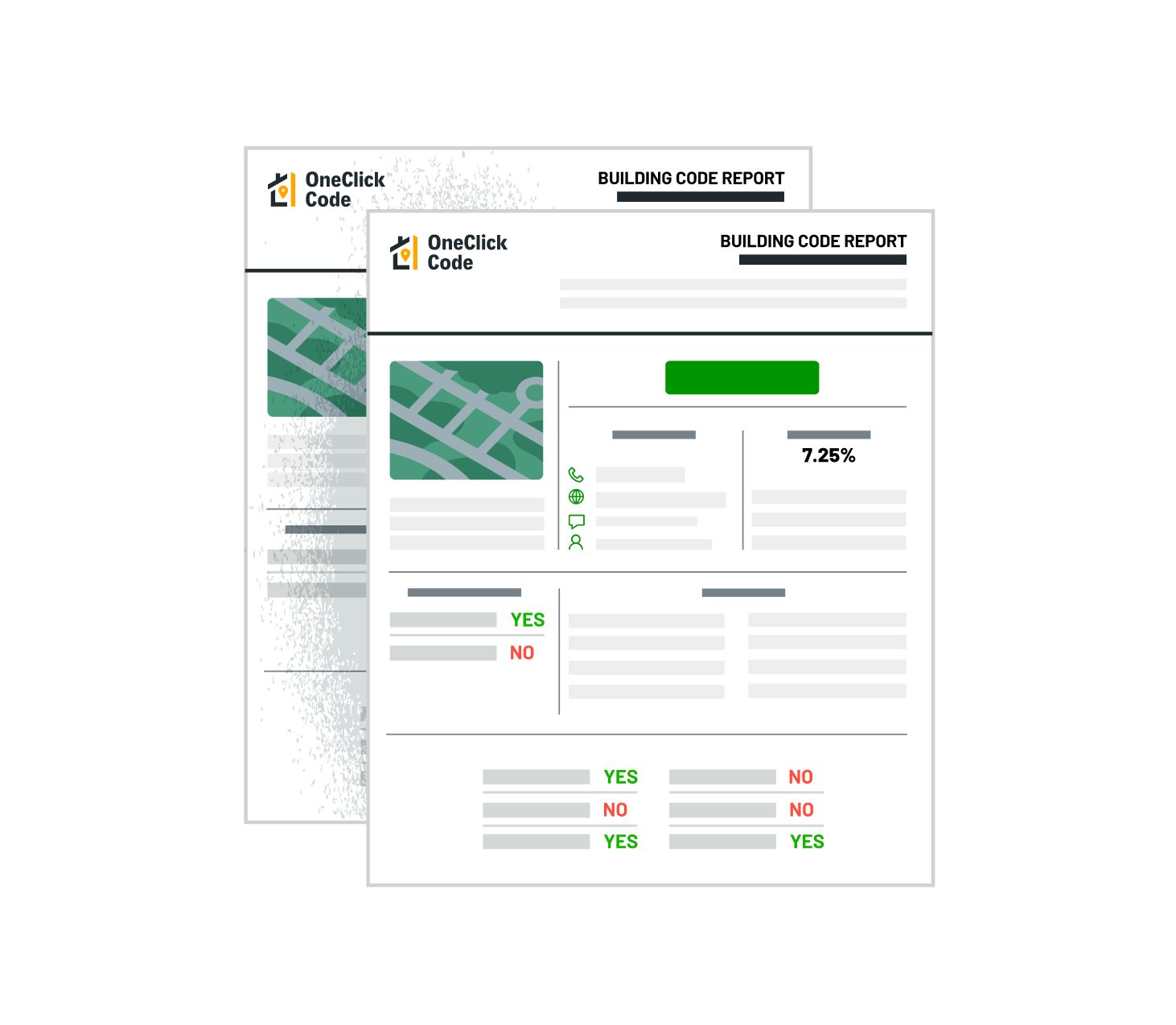
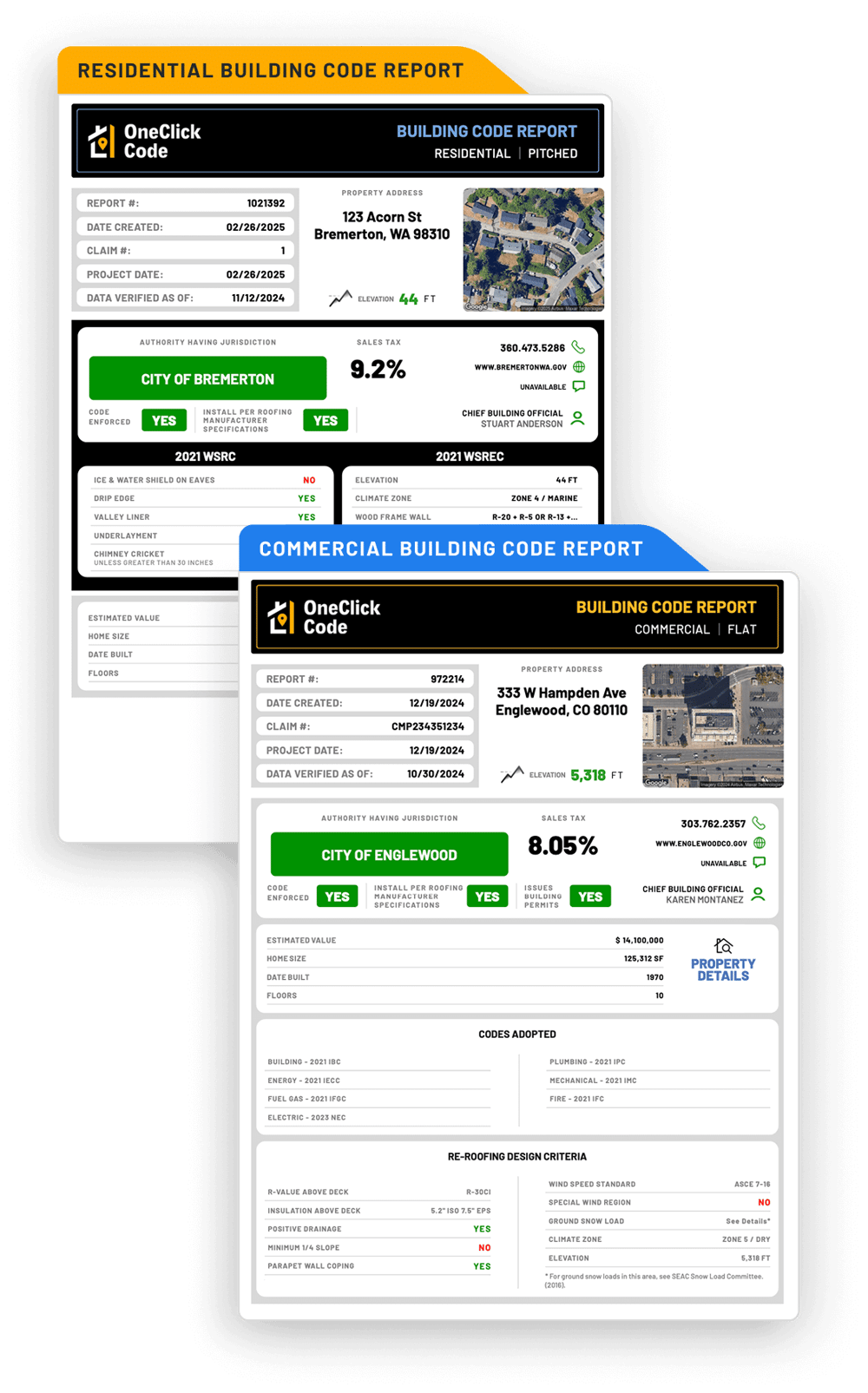
Instead of calling a building department and waiting on hold, OneClick Code allows you to enter a property address and instantly see the specific codes for that jurisdiction.
It auto-detects local amendments that might not be in the national books.
Boosting Accuracy for Bids and Claims
Contractors use this data to ensure their bids include the cost of all required materials (like drip edges or specific underlayment).
Adjusters use it to verify that an insurance claim covers the actual cost of bringing a roof up to current local code.
Trusted by Professionals
-
Data-Driven Partnerships: Our platform is backed by direct data partnerships with cities and local code authorities.
-
Industry Endorsement: Because the data is address-specific and verifiable, it has become a "gold standard" for professionals who need to justify their material costs.
-
Reducing Liability: Professionals trust OneClick Code to help them "build to code" every time, protecting their reputation, business licenses and safety homeowners.