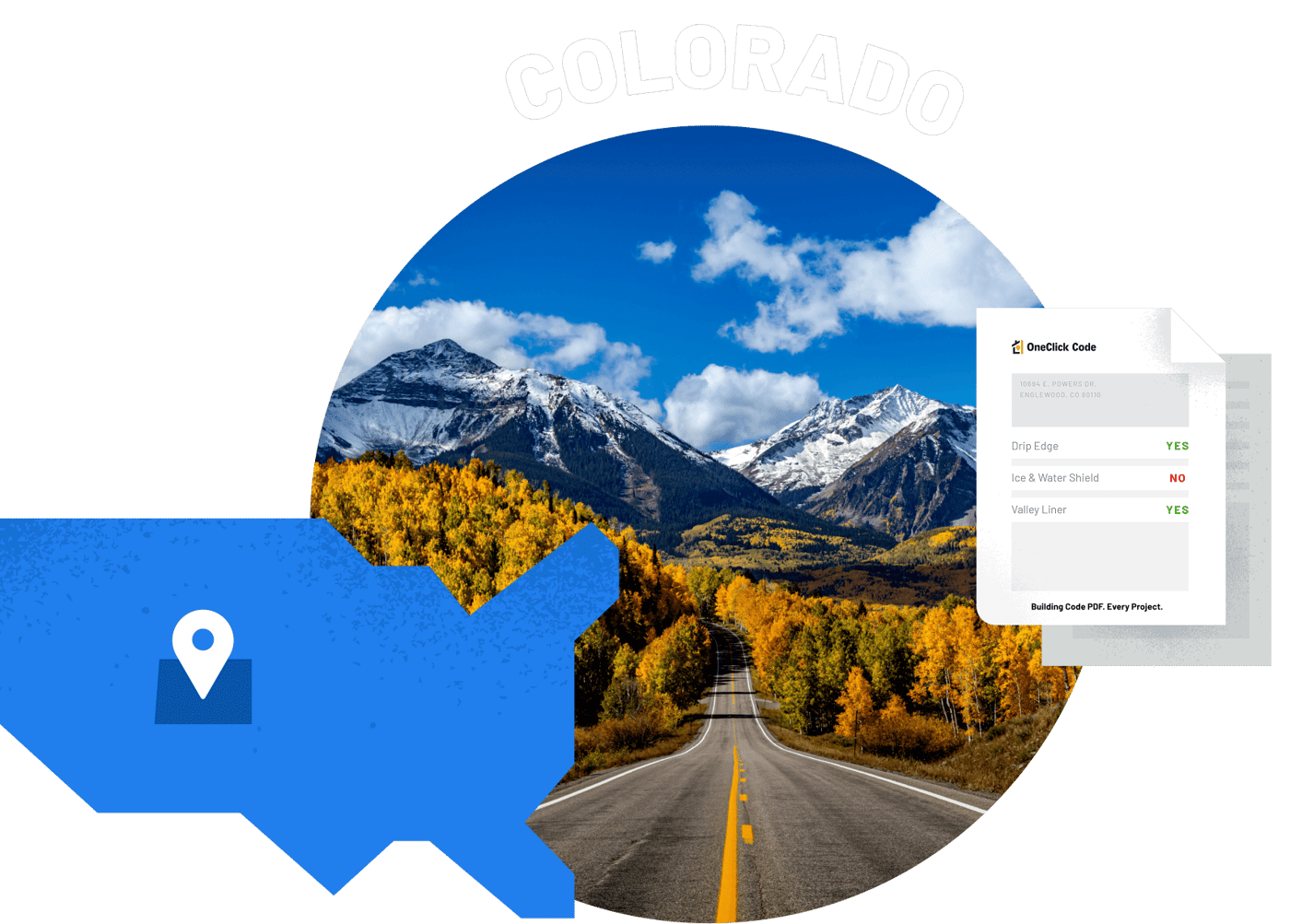
Get Accurate Colorado Roofing Code Reports Instantly
From Mountain Winds to Snow Loads
Jurisdiction-specific Colorado roofing code reports that cover snow/ice barrier rules, clear yes/no requirements, permit fee costs, and local jurisdiction amendments, so you can stay compliant and build with confidence.
Key Colorado Counties for Roofing Contractors
High-impact zones
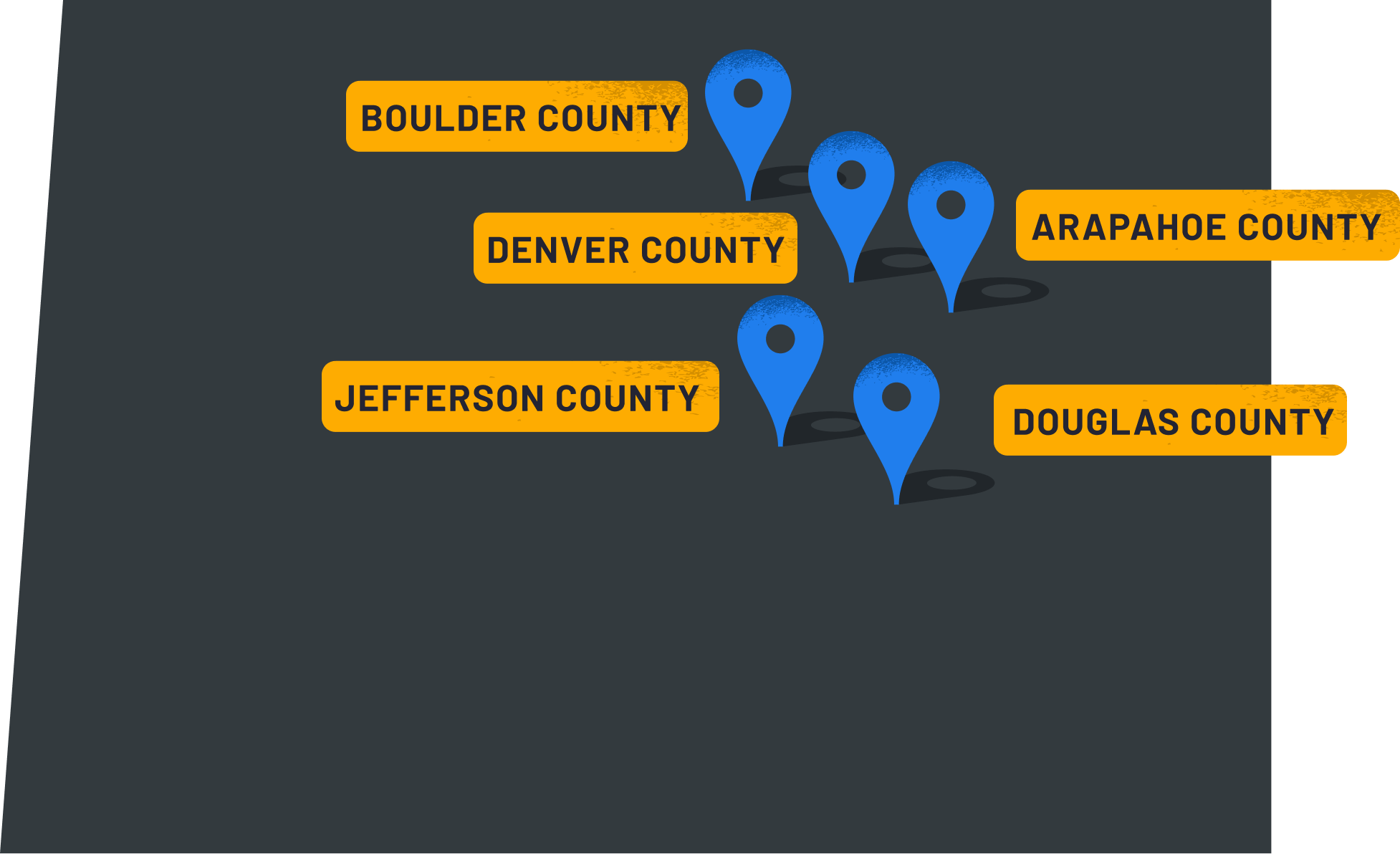
Colorado roofing requirements vary significantly by geography, elevation, and local enforcement. These counties represent some of the most active and complex roofing jurisdictions in the state:
-
Denver County – Dense urban environment with higher wind design requirements and strict permitting enforcement.
-
Arapahoe County - Covers a wide mix of suburban and commercial areas with varying reroof permit thresholds.
-
Douglas County – High‑elevation exposure with enhanced wind and ice barrier requirements; adopts 2021 codes with local amendments.
-
Boulder County – Mountain exposure, snow load considerations, and environmental regulations affecting roofing materials and installation.
-
Jefferson County - Diverse terrain from foothills to urban zones, requiring close attention to wind, snow, and layering rules.
OneClick Code provides jurisdiction‑specific roofing code reports for all Colorado property addresses.
Why Colorado Roofing Codes Are Complex
-
Colorado’s roofing climate includes heavy snow loads, ice dams, high‑altitude winds, and terrain‑influenced exposure, all of which affect roofing code requirements.
-
The state adopts the 2021 ICC codes, but does not enforce them over local jurisdictions. Local jurisdictions may adopt their own codes with their own amendments. Example: Douglas County, Colorado uses 2021 Codes with specific roofing rules.
-
Local municipalities within Colorado each may interpret or amend roofing code items differently — making address‑specific, jurisdiction-driven code research essential.
Snow, Ice & Roof Drainage
-
Many Colorado jurisdictions mandate ice and water barrier underlayment at eaves, typically extending a minimum of 24 inches past the exterior wall line.
- Snow load and ice dam risk also impact sheathing deck requirements and re‑roof regulations.

Wind & Uplift Considerations
-
For high wind elevation areas (especially over 7,000 ft in some counties), roofing materials must meet higher wind rating standards (ASTM D7158 or D3161) and fastening schedules.
- Roof attachments and structural design must accommodate Colorado’s mountainous exposure.

Layer Limits, Sheathing & Material Standards
-
Colorado rules often limit overlays: many jurisdictions permit no more than two layers of existing roofing.
- Sheathing boards, gaps, and fasteners are regulated (for example, no continuous gap > ½” in decking) to ensure deck integrity under snow and wind loads.
Your All-in-One Solution
OneClick Code
From Denver and Aurora to Douglas County and Boulder County, our reports provide clarity on jurisdiction-specific code requirements, permit fees, roofing standards, and local amendments, so you can build with confidence anywhere in Colorado.
Why Colorado Contractors Choose OneClick
Accurate Estimates
Generate jurisdiction‑specific roofing code data, including permit fees, snow and wind requirements, and layer limits, so your estimates reflect real jurisdiction rules instead of assumptions.

Reduced Risk of Fines
Avoid failed inspections and rework by following verified local amendments, code editions, and enforcement nuances across Colorado jurisdictions.

Faster Project Timelines
Spend less time researching municipal websites or calling building departments. OneClick Code delivers everything in claim-ready reports, so projects move faster.

Professional Reports
Provide clear, professional documentation that supports code‑driven scope decisions for homeowners, adjusters, and insurers.