Get Accurate Charleston Roofing Codes and Hurricane Reports Instantly
From Chucktown's Historic Roofs to the Coast
Lookup Charleston's local roofing code requirements, understand storm history, and use calculators for sheathing, ventilation, and permit fees. OneClick Code equips contractors to streamline operations, reduce risk, and boost efficiency across every municipality.
.png?width=1962&height=1542&name=CHARLESTON%20(1).png)
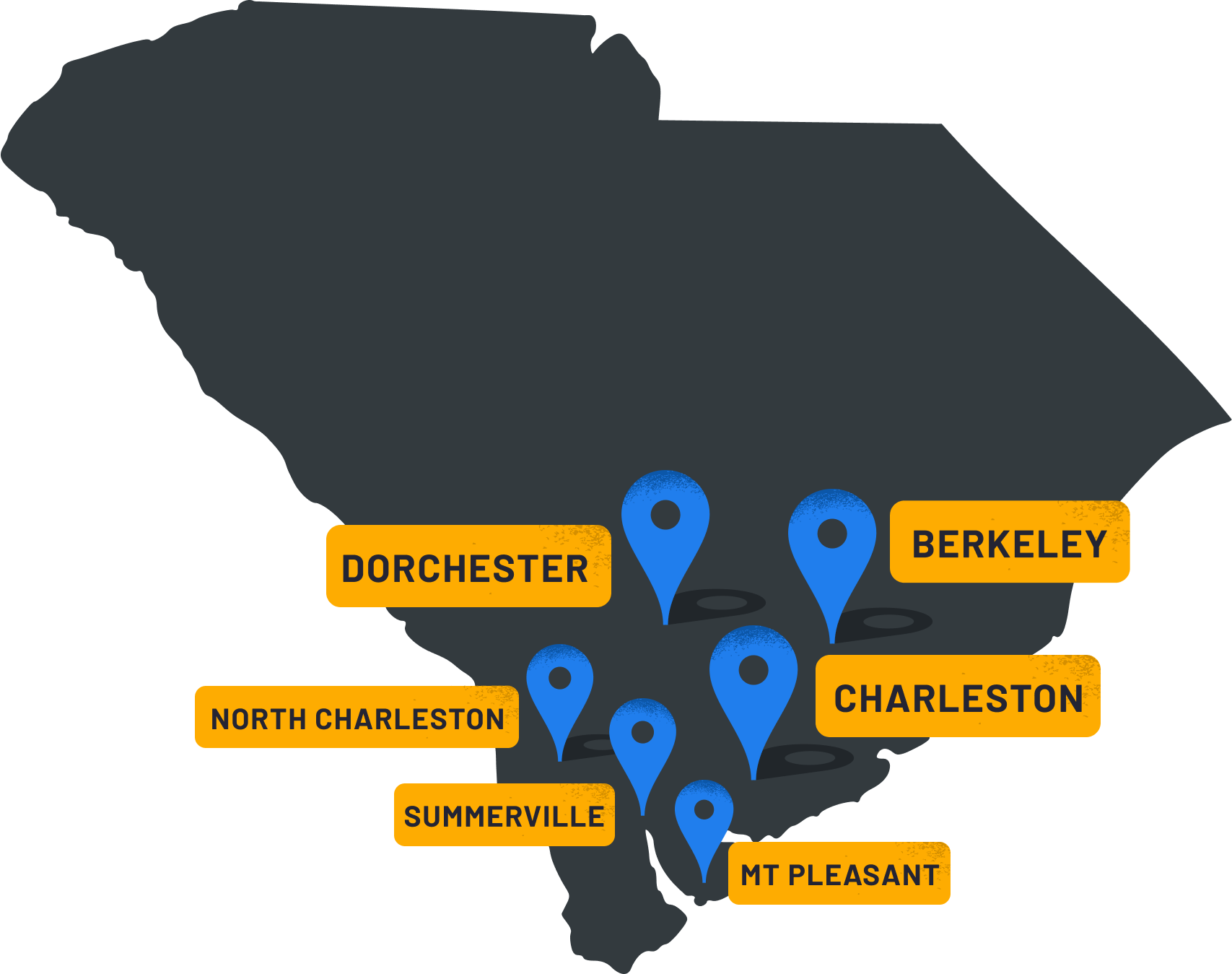
Key Charleston Metropolitan Municipalities for Roofing Contractors
High-impact zones
Charleston enforces the latest International Building Codes (IBC) and International Residential Code (IRC) with local amendments. Key jurisdictions to know:
- Charleston County – The core county with specific coastal and historic requirements.
- Berkeley County – A major neighboring county with distinct code variations.
- Dorchester County – A rapidly growing area with specific code standards.
- Mount Pleasant, Summerville, North Charleston – Each applies locally specific amendments.
OneClick Code delivers city-level code enforcement, permit requirements, and compliance data across all County municipalities using the latest International Building Codes (IBC), International Residential Code (IRS), and International Energy Conservation Code (IECC) standards.
Why Charleston Roofing Codes Are Complex
Charleston endures coastal hurricanes, storm surges, and a legacy of historic preservation. The unpredictable weather and unique architectural demands require strict roofing code compliance. With building rules changing from the Battery to Mount Pleasant, accessing accurate, local code data is essential for contractors.
Coastal Hurricanes & Storms
Charleston's coastal location makes it highly vulnerable to hurricanes and tropical storms. Building codes rigorously address wind uplift, requiring enhanced fastening, specific materials, and fortified structural systems to ensure roof stability during severe weather.
.png?width=831&height=831&name=Hurricane%20(1).png)
Historic Preservation
Working in the historic district of downtown Charleston comes with unique challenges. Roofing professionals must adhere to specific local amendments for materials, colors, and installation methods to preserve the city’s architectural heritage.

Extreme Heat & Humidity
The South Carolina coast is known for its high temperatures and humidity. Codes dictate proper ventilation and moisture barriers to prevent mold growth, rot, and premature material failure, which are critical for the long-term integrity of a roof.

Saltwater Exposure
Proximity to the Atlantic Ocean means roofs are exposed to salt spray and corrosive elements. Codes may require the use of materials with a high resistance to corrosion to ensure durability and longevity.

Your All-in-One Solution
OneClick Code
OneClick Code provides Charleston building code reports, weather history, calculators (IWS, waste, ventilation), and permit fee insights in one unified interface. The city of Charleston can be difficult to track changes for the latest international code council (ICC) requirements for existing buildings. OneClick was designed to give you instant access to codes adopted and printable PDF documentation.
Why Charleston Contractors Choose OneClick
Whether filing an Insurance Claim on existing buildings, or tracking down the appropriate jurisdiction, this task is often painful and time consuming. OneClick helps contractors reference minimum requirements for Charleston construction codes based on the latest International Building Code (IBC) standard.
Accurate Estimates
Use up-to-date, location-specific code info so your estimates are precise and defensible.

Reduce Code Compliance Risks
Ensure roofing systems meet requirements for wind, moisture, historic preservation, and coastal exposure.

Streamlined Project Timelines
Build faster, smarter, and with confidence, from weather data to code requirements.

Professional Reports
Submit structured, professional documentation that’s trusted by homeowners, insurers, and adjusters.