Get Accurate South Carolina Roofing Code Reports Instantly
OneClick Code gives you instant, property-specific clarity for building code intelligence. Whether you're working under South Carolina building codes in Columbia or navigating strict coastal wind zones in Charleston, every estimate stays accurate, defensible, and built to pass inspection. Access roofing codes, storm history, and smart calculators for IWS, waste, ventilation, and permit fees.
.png?width=1892&height=1503&name=SOUTH%20CAROLINA%20(1).png)
Stay ahead of South Carolina code changes
South Carolina building codes evolve alongside IRC and IBC update cycles, with state and local amendments layered in. Coastal wind requirements are updated frequently, storm resilience standards keep rising, and municipalities may enforce stricter local rules.
Tracking these changes by hand is slow and risky. OneClick Code continually updates code requirements so you can count on accuracy for every address.

Why South Carolina roofing codes are complex
South Carolina's environment creates a uniquely challenging roofing landscape: hurricane-force winds along the coast, heavy rainfall and humidity statewide, and severe thunderstorms and hail inland.
The state adopts versions of the IRC and IBC with local amendments, while municipalities may impose more. The result is complex rules where municipal-level accuracy is essential to your business.
Climate and risk factors that drive South Carolina roofing rules
Four conditions shape how roofs are specified and inspected across the state.
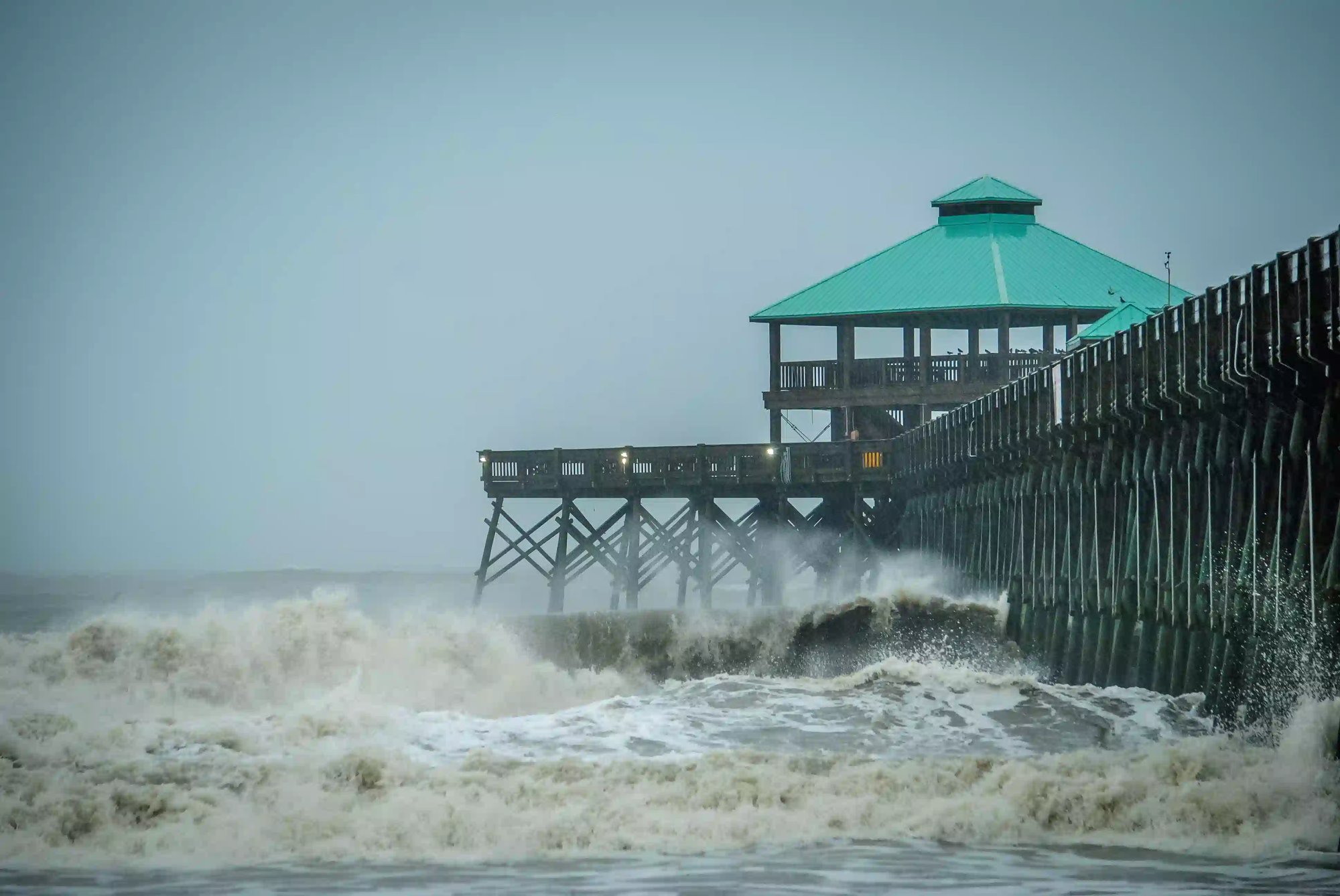
Hurricane winds & coastal exposure
Coastal South Carolina demands roofing built for extreme conditions. Wind uplift resistance must meet ASTM D7158 / D3161, edge details and fastening patterns are tightly controlled, and installation errors can lead to failure during storm events.

Heavy rain & moisture protection
South Carolina roofs must shed water fast and effectively. Underlayment layering is critical, flashing and drip edge installation must meet code, and drainage must prevent water intrusion.
Heat, humidity & ventilation
High humidity creates long-term risk for poorly ventilated roofs. Moisture buildup leads to mold and structural damage, weak airflow accelerates material wear, and proper ventilation improves energy efficiency and lifespan. OneClick Code keeps your ventilation system code-compliant and performance-ready.
Storm damage & insurance compliance
Roofing work here is often tied to insurance restoration. Code compliance is required for claim approvals, missing line items delay supplements, and incorrect installs cause failed inspections. Back every estimate with verifiable, address-specific data to reduce friction and speed approvals.
OneClick Code, technology built with intention
OneClick Code simplifies roofing compliance across South Carolina by delivering property-specific code reports for the correct municipality. No more jumping between county websites or outdated PDFs.
- Property-specific roofing code reports for the correct municipality
- Local building code requirements and amendments
- Permit fees and use tax calculations
- Wind zone and storm history insights
- Built-in calculators for IWS, waste, and ventilation
Why South Carolina contractors choose OneClick Code
Accurate Estimates
Build estimates using real, address-specific data.
Reduce risk of code violations
Meet local code requirements the first time, on every project.
Faster project timelines
Cut research delays and move from inspection to estimate faster.
Professional, insurance-ready reports
Deliver clean, defensible documentation that supports approvals and payments.

Key regions
Key South Carolina regions for roofing contractors
High-impact zones where code accuracy matters most.
- Charleston County: coastal hurricane exposure
- Horry County (Myrtle Beach): high wind and moisture risk
- Beaufort County: severe coastal conditions
- Richland County (Columbia): major metro market
- Greenville County: inland storm activity
OneClick Code provides roofing codes and permit data across South Carolina counties, so you stay compliant wherever you work.