Skip to content

Roof Sheathing Codes Report

SHEATHING CODES

Access the accurate sheathing span, load, and fastening details you need – powered by the latest IRC and APA standards. Build strong, compliant roofs – faster.
Header2 (1)

Wasting Time on Code Lookups?

NO-4

Manual code searches across IRC and APA tables slow you down.

Misinterpreting span, load, and fastening can lead to costly errors.

Guesswork compromises roof integrity and safety.

Accurate Sheathing Requirements

YES-1

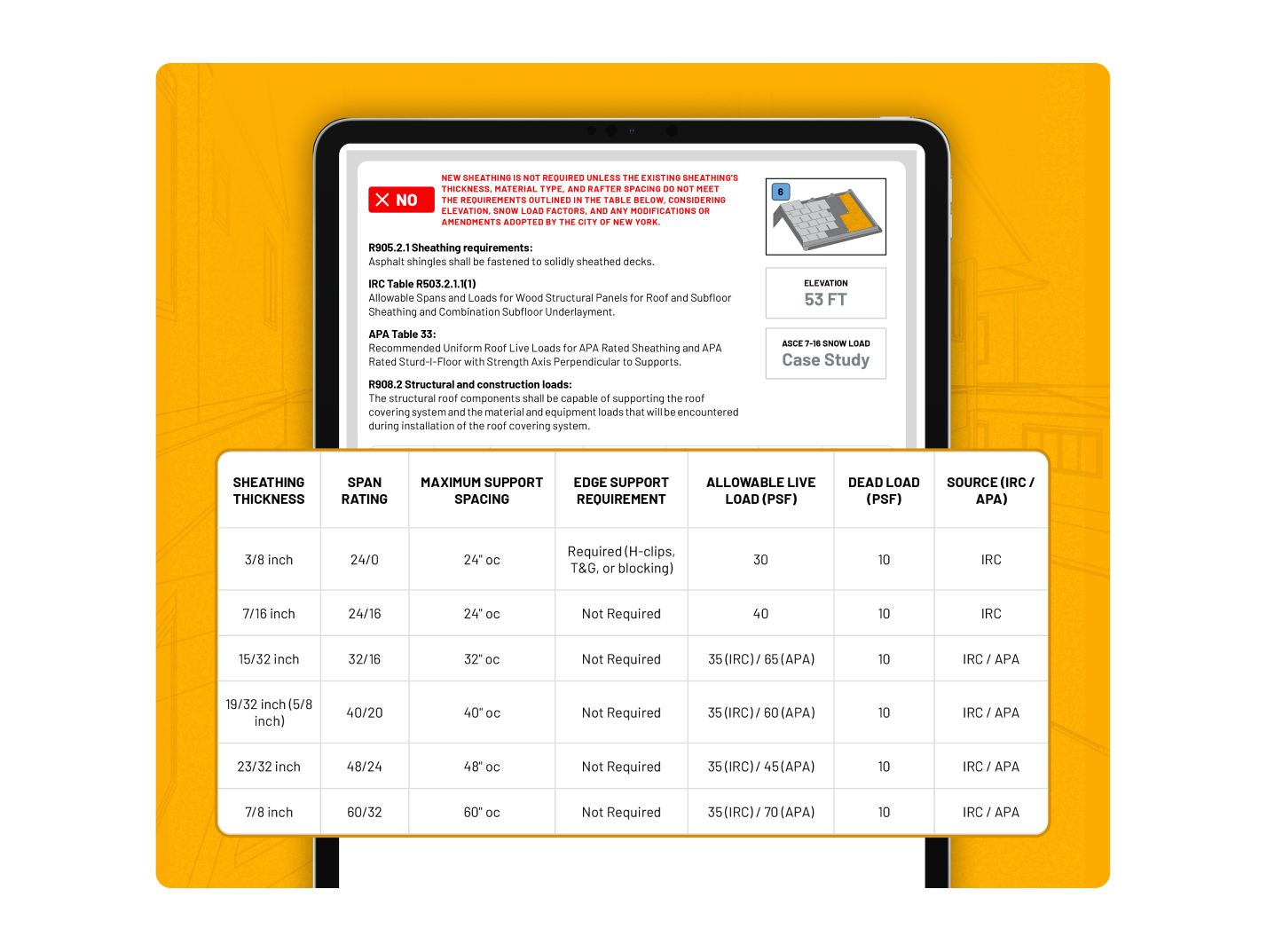
Access data from IRC Table R503.2.1 (1) and APA Table 33 directly in your reports.

Get clear specifications on allowable spans, live load capacities (even beyond 40 psf), minimum thickness, and fastening requirements.

Note: Remember that local municipal and elevation-specific variances may apply, especially for snow, construction, and structural load requirements. Always verify these local amendments.

Ensure your projects meet local building codes every time.

→ Access best practice guidance for durable, long lasting roofs.

Why Accurate Sheathing Requirements Matter

Stronger Roofs, Safer Jobs

Correct sheathing = structural integrity = positive brand reputation for your roofing business.

Estimate with Confidence

Get a clear yes or no if sheathing replacement is required.

The Details Matter

Understand load capacities (including high live loads per APA Table 33) for durable roofs.

Ensure Rock-Solid Attachment

Comply with IRC R905.2.1 for proper asphalt shingle fastening to solid sheathing.

Your Partner in Building Excellence & Compliance

ONECLICK CODE:

Stop settling for minimums. OneClick Code provides the detailed sheathing specifications and best practice guidance (beyond basic requirements) to ensure structural integrity and long-term durability – even helping you determine if existing sheathing can be retained per IRC R908.2 within the Building Code Detail report. Always consult local building codes for any municipal or elevation-specific amendments that may affect structural load requirements.
Sheathing

FAQs - Frequently Asked Questions

Roof Sheathing Code Requirements

What are roof sheathing codes?

Roof sheathing codes are the standards adopted by your local authority having jurisdiction that dictate what deck material, thickness, span and fastening a roof must have. These requirements ensure the sheathing can withstand snow loads, wind uplift and live loads specific to the location.

Why do roof sheathing codes matter when writing an estimate?

Using the wrong sheathing specification in your estimate, whether the wrong thickness, material or span, risks a supplement, a warranty dispute or a carrier rejecting the claim. The exact sheathing code gives adjusters and contractors a shared standard to work from and ensures the homeowner's roof is built correctly.

How can I use the OneClick Code Sheathing Report in my estimate?

Enter the property address and OneClick Code returns the local sheathing requirements automatically. Attach the report to your estimate to show both the AHJ's code requirements and how your estimate aligns with them, making your documentation defensible for carriers and accelerating review.

Is 7/16 OSB acceptable for roof sheathing?

It depends on the span rating and local code requirements. IRC Table R503.2.1(1) and APA Table 33 govern allowable spans and load capacities for different thicknesses. OneClick Code's report identifies the exact minimum thickness and span requirements for your specific jurisdiction so you know what qualifies before you spec the job.

What sheathing criteria does the OneClick Code report include?

The report covers material type (plywood or OSB), minimum thickness, allowable span between supports, fastening pattern and any special requirements, so you are working from verified code requirements rather than anecdotal numbers from past jobs.

How often does OneClick Code update its sheathing code data?

The system continuously monitors changes in building code editions and local amendments. When a jurisdiction revises its sheathing requirements, OneClick Code's team updates the database so you are always working with current information.