
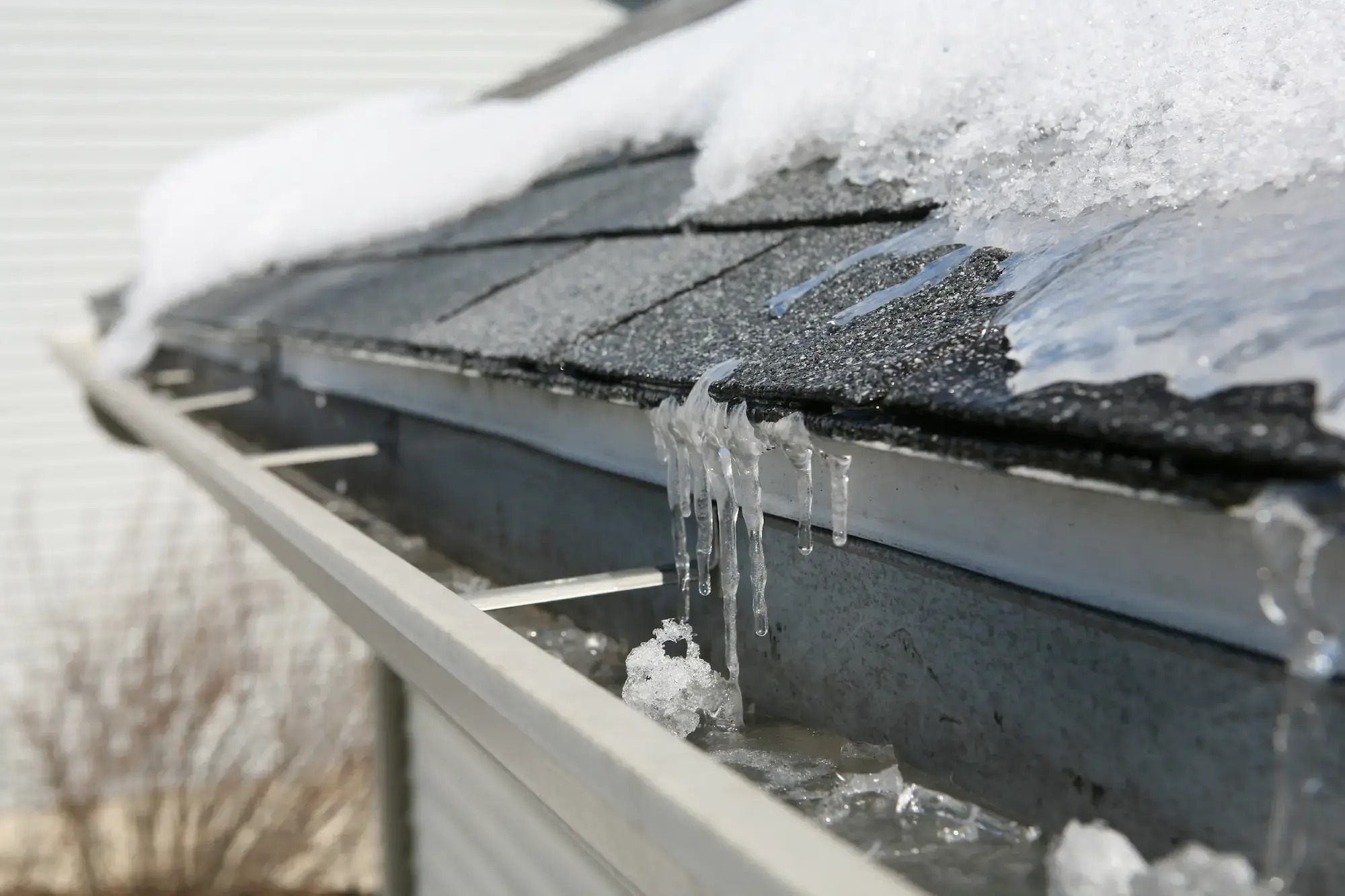

As a roofing contractor, you're well aware of the devastating consequences of water damage, particularly during harsh winter conditions. You’ve surely had a recent project where a homeowner's attic suffered significant water damage due to a severe ice dam. Ice dams, in particular, often lead to leaks, mold growth, and structural damage. To mitigate these risks and protect your clients' homes, it's crucial to understand the importance of Ice and Water Shield (IWS) to prevent costly and time-consuming issues.
What is Ice and Water Shield?
Ice and Water Shield (IWS) is a self-adhering, waterproof underlayment membrane that protects roofs from water infiltration, particularly in vulnerable areas such as eaves, valleys, and around penetrations. It acts as a barrier, sealing around nails to prevent water from seeping underneath the shingles.
It is typically made from rubberized asphalt or polymer-modified bitumen, giving it superior flexibility and durability in extreme weather conditions. Its self-sealing properties around fasteners create a watertight seal that prevents leaks even when roofing materials are compromised.
How Ice and Water Shield Works
Ice and Water Shield bonds directly to the roof deck, forming a continuous waterproof barrier beneath shingles or other roofing materials.
This direct adhesion prevents water infiltration from snow, rain, and ice, even if the outer roofing layer is damaged.
It also expands and contracts with temperature changes, maintaining performance in both cold and hot climates.
Protection Against Ice Dams
Ice dams form when snow melts unevenly on your roof, causing water to back up under the shingles. IWS prevents this by creating a waterproof barrier that allows water to drain properly.
Ice dam formation occurs when warm attic air melts snow on the roof, which then refreezes at the colder edges, creating a blockage.
This trapped water can seep beneath shingles, leading to mold growth, insulation damage, and structural deterioration if not properly managed.
Protection Against Other Leak Sources
Strong winds can drive rain beneath shingles, especially at roof edges and valleys. IWS provides an additional layer of protection against this type of water intrusion.
Leak protection is also critical around penetrations such as chimneys, vents, and skylights, which are common entry points for water.
Wind-driven rain can penetrate roofing systems at high speeds, making a sealed underlayment essential for full protection. IWS also reinforces valleys and low-slope areas where water naturally collects, thereby increasing the risk of leaks.
Types of Ice and Water Shield
Selecting the appropriate Ice and Water Shield (IWS) ensures optimal roof protection. Different roofing applications require specific types of IWS to deliver optimal performance.
Choosing the correct type directly affects durability, effectiveness, and the overall lifespan of the roof. Application-specific materials improve resistance to weather, temperature changes, and mechanical stress.
Granular / Sand Surface
Granular or sand-surface IWS is ideal for valleys and areas with steep slopes. Its superior slip resistance prevents the material from sliding during installation, ensuring a secure and watertight seal. For example, a granular IWS might be used on a mountain cabin with a steeply pitched roof to provide extra protection in harsh weather conditions.
The textured surface improves installer safety and enhances grip in steep or high-risk areas. It performs exceptionally well in heavy water-flow zones such as valleys.
Smooth Surface
Smooth surface IWS is perfect for low-slope and flat roofs. Its smooth design ensures seamless integration with other roofing materials, such as shingles or metal panels. For instance, a smooth-surface IWS might be used on a commercial building with a flat roof to prevent water infiltration during heavy rainfall.
This type allows for tighter seals and a clean, uniform finish across the roof surface.
It is commonly used in commercial or modern residential roofing systems.
High-Heat Shield
High-Heat IWS is specifically designed for metal roofs. It can withstand high temperatures and thermal expansion, protecting the roof from heat-related damage. A high-heat IWS might be used on a metal barn roof in a hot, arid climate to prevent premature aging and roofing material deterioration.
It maintains adhesion under extreme heat conditions and prevents premature deterioration. This makes it essential for metal roofing systems exposed to direct sunlight.
Where to Install Ice and Water Shield
Proper placement is critical to maximizing protection and efficiency.
-
Focus on eaves, valleys, and penetrations where water is most likely to accumulate.
-
Strategic placement is often more effective than full roof coverage, depending on the climate and building codes.
-
Local regulations and weather conditions play a major role in determining installation requirements.
-
Proper attic ventilation is also essential to reduce moisture buildup and prevent ice dam formation.
Critical Areas
At the eaves, Ice and Water Shield is typically installed along the first 3 to 6 feet to prevent ice dam-related leaks. Valleys and roof intersections require full coverage due to heavy water flow.
Rakes (roof edges) exposed to strong winds should also be protected to prevent wind-driven rain intrusion.
Roof Penetrations
Additional protection is required for chimneys, vents, skylights, dormers, and roof-to-wall intersections.
These areas are highly vulnerable due to breaks in the roofing surface and require reinforced sealing.
How Much Ice and Water Shield Do You Need?
- Calculating the right amount of IWS needed is crucial to ensure adequate coverage. Several factors influence this calculation:
- Regions with heavy snowfall typically require more extensive coverage, while steeper roofs may need less material.
- Building codes often specify minimum coverage requirements for ice-prone areas.
Using a calculator simplifies the process and ensures accurate results.
A dedicated IWS calculator helps eliminate manual errors, optimize material usage, and reduce unnecessary costs. It also improves estimate accuracy and supports faster insurance claim approvals.
OneClick Code's Ice and Water Shield Calculator: Your Free Solution
Calculating the exact amount of IWS can be time-consuming and prone to errors. OneClick Code offers a free, user-friendly Ice and Water Shield Calculator to simplify the process. Unlike other calculators on the market, our tool provides highly detailed results with clear, easy-to-understand graphics.
Enter your roof measurements, and the calculator will provide the exact amount of IWS needed to ensure complete protection. It also results in square footage or full and half rolls, minimizing waste and unnecessary purchases.
By utilizing OneClick Code's IWS Calculator, you can:
- Save valuable time and effort: Get accurate results in minutes, streamlining your workflow.
- Back up your estimates with accurate data: Leading to faster insurance claim approvals.
- Eliminate manual calculations: Reduce the risk of errors and ensure accurate material estimates.
- Optimize your material usage: Minimize waste and save money.
- Gain a competitive edge: Offer clients a higher level of service and expertise.
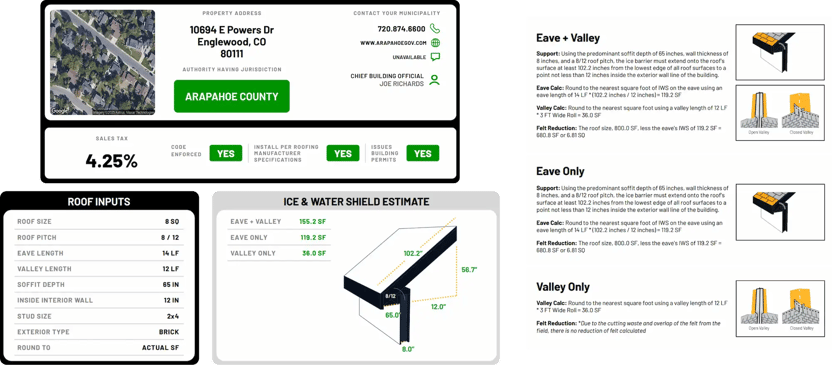
Don't leave your roof vulnerable to winter's harsh conditions. Use high-quality IWS and OneClick Code's free IWS Calculator for optimal protection and peace of mind.
Conclusion: Protecting Your Roof Long-Term
Ice and Water Shield is essential for protecting roofs from leaks, ice dams, and extreme weather.
Its ability to create a continuous waterproof barrier, self-seal around fasteners, and adapt to temperature changes makes it one of the most effective roofing underlayments available.
Investing in high-quality materials and proper installation significantly extends the life of your roof.
In the long term, proper use of Ice and Water Shield reduces maintenance costs, prevents damage, and ensures lasting protection.
For best results, use an Ice and Water Shield calculator to determine exact material needs or consult a professional for precise installation and maximum performance.
