
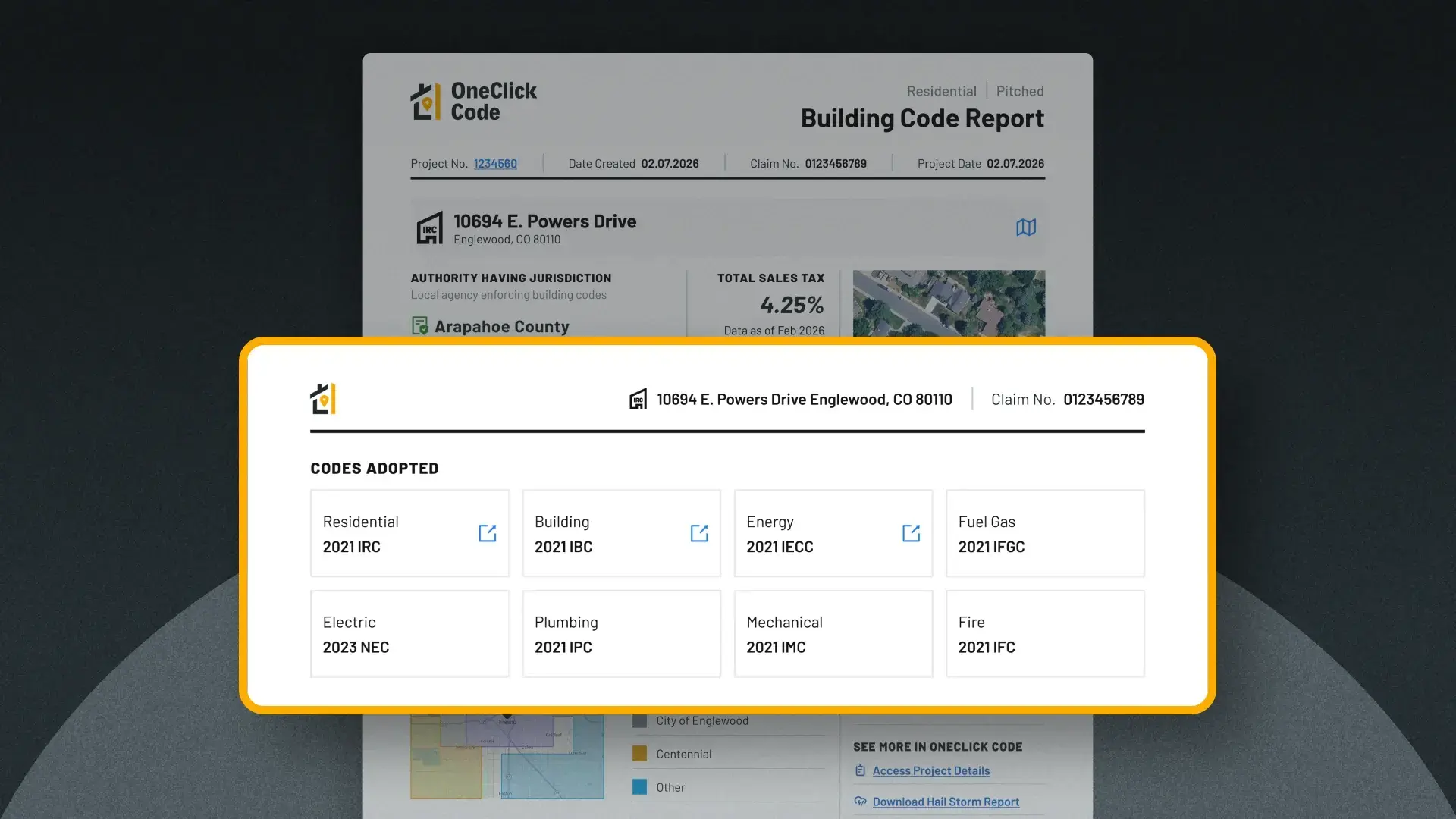

What Are Roofing Building Codes?
Every successful roofing project starts with a single, non-negotiable step: understanding the applicable building codes. But for a roofing contractor or insurance adjuster, a residential code is not the same as a commercial one. While the model codes—the International Residential Code (IRC) and International Building Code (IBC)—provide a framework, remember that local amendments always apply. These model codes are often adapted at the local level to reflect regional risks such as high winds, heavy snow, or seismic activity, with enforcement handled by the Authority Having Jurisdiction (AHJ). Treating them as the same is one of the quickest ways to face failed inspections, costly rework, and project delays.
Understanding the difference between residential and commercial roofing codes isn't just about avoiding a fine; it's about mastering your craft, submitting accurate bids, and protecting your business. Let's break down the critical distinctions you need to know, so you can reduce risk and ensure accuracy on every job.
IRC vs IBC: Key Differences Explained
The fundamental difference lies in the guiding documents themselves.
When to Use IRC vs IBC
Residential roofing is primarily governed by the International Residential Code (IRC). This code is prescriptive, meaning it outlines specific requirements for one- and two-family homes, as well as townhomes, up to three stories. It tells you exactly which materials to use, the required slope, and specific fastening patterns.
Commercial roofing is governed by the International Building Code (IBC). This code is more performance-based. It doesn’t just tell you what to do; it outlines the performance standards a roof must meet. This requires more engineering, testing, and compliance with industry standards from organizations like FM Global and UL. Additionally, the IRC is strictly limited to residential structures, while the IBC applies to commercial, industrial, and mixed-use buildings, with adoption cycles and updates varying by state and municipality.
In practice, contractors must also determine which code applies in edge cases, such as mixed-use buildings, where IBC requirements typically take precedence due to occupancy classification.
Structural Requirements and Load Design
The roof of a home and the roof of a hospital are built to withstand very different forces. Residential roofing has simpler load requirements, focused on snow, wind, and seismic loads relevant to smaller structures. Assemblies are typically wood-framed and lighter-weight.
Commercial roofing must be engineered to withstand far greater live loads, including the weight of HVAC units, extensive foot traffic, and higher wind uplift pressures. These assemblies often require robust steel or concrete decks and specific structural calculations to ensure the integrity of the entire building. For an adjuster, knowing whether a roof meets IBC load requirements can determine whether a claim for structural damage is covered or excluded. This includes evaluating both dead loads (permanent weight of materials) and live loads (temporary forces like equipment, weather, or occupancy), which are significantly higher in commercial applications.
Wind Load Requirements
Wind design plays a critical role in both IRC and IBC compliance, with factors such as regional wind speeds and exposure categories influencing installation methods.
High-wind zones may require enhanced fastening patterns, sealed roof decks, and hurricane clips to prevent uplift failures.
Snow Loads and Cold Climate Considerations
In colder climates, roofing systems must address snow accumulation, ice dams, and freeze-thaw cycles.
IRC often mandates ice barrier installation at eaves, while commercial systems may incorporate snow retention systems and advanced ventilation strategies to maintain performance.
Fire Resistance and Safety Standards
Safety standards change dramatically depending on the building's size, occupancy, and use. For residential roofing, fire classifications are generally tied to the roofing material itself, such as Class A, B, or C shingles, to protect the dwelling and adjacent homes.
Commercial building codes often have much stricter fire-resistance requirements. They demand more rigorous fire-rated assemblies, specific penetration details, and may even require integration with a building's sprinkler system, all to ensure the safety of a larger number of occupants.
Fire Testing and Standards
These requirements are often validated through standardized testing such as ASTM E108 and UL 790, and may also be influenced by NFPA guidelines, particularly in high-risk or wildfire-prone areas.
Roofing Materials and Performance Standards
The material choices are also defined by code. On a home, you'll see common materials like asphalt shingles, wood shakes, or tile, with IRC codes prescribing nail patterns and underlayment placement.
For commercial roofing, the materials are more performance-driven. You’ll work with products like single-ply membranes (TPO, EPDM, PVC), built-up roofing (BUR), and modified bitumen. These materials must meet specific standards for puncture resistance, reflectivity, and energy efficiency.
Material Compliance Standards
Compliance is often verified through certifications from ASTM, UL, and FM Global, ensuring materials meet wind uplift, fire resistance, and impact performance requirements.
Roof Slope, Drainage, and Design
A key visual difference between the two is the roof slope. Residential roofs are typically steep-sloped (a pitch of 2:12 or greater), with building codes dictating underlayment, ice barriers, and flashing details to manage water runoff.
Commercial roofs, on the other hand, are often low-slope (a pitch of 2:12 or less). These roofs require a completely different drainage strategy, with codes mandating engineered systems like scuppers, interior roof drains, and tapered insulation to prevent water from ponding and causing structural damage. For adjusters, knowing whether a roof met IBC drainage requirements can determine whether ponding water damage is covered or excluded. Improper drainage design is one of the most common causes of code violations and long-term structural issues.
Energy Efficiency and Sustainability Codes
Energy codes have become a major factor in modern construction. While residential roofs may need to comply with the International Energy Conservation Code (IECC) for insulation and ventilation, commercial projects face much stricter standards. Commercial building codes often require specific insulation R-values, strict cool roof requirements, and integration with complex air and vapor barriers to meet ASHRAE or local green building codes. These requirements vary by climate zone and are increasingly tied to sustainability goals and long-term energy performance.
Roof Replacement vs. Reroofing: Code Requirements
Navigating building code compliance extends beyond new installations, and it also plays a critical role in reroofing decisions. In many jurisdictions, building codes limit the number of allowable roof overlays and may require a full tear-off if the existing system is structurally compromised or fails to meet current standards. Understanding these thresholds is essential to avoid failed inspections and costly rework.
Permits, Inspections, and Documentation
The final stages of a project also reveal key differences. Residential inspections are usually straightforward, with a focus on material installation and fastening.
For commercial projects, a much more rigorous process is required. You'll need design documents, shop drawings, and engineering sign-off. The inspection process often involves multiple stages and special testing (e.g., pull tests) to ensure the system meets its performance standards. Contractors need this to pass inspections, while adjusters rely on this documentation to verify claim accuracy. This process typically includes permit applications, mid-project inspections, and final approvals, all of which are overseen by the AHJ.
OSHA Safety Requirements for Roofing Projects
Compliance doesn’t stop at the roof system itself. OSHA safety regulations are enforced on every job site, requiring fall protection for work performed at heights of six feet or more. This includes the use of guardrails, safety nets, and personal fall arrest systems (PFAS). Proper training and adherence to these safety standards are mandatory, not only to avoid penalties but to ensure worker safety and project continuity.
Common Code Violations and How to Avoid Them
Contractors must also be vigilant in avoiding common code violations that frequently arise during reroofing projects. Issues such as poor ventilation, improper flashing, and inadequate drainage can quickly lead to inspection failures, delays, and increased costs.
Ultimately, mastering these code requirements is foundational to running a reliable and profitable roofing operation. While IRC guidelines provide clear, prescriptive rules for residential projects, IBC standards require a more performance-based, engineered approach for commercial work. Strict adherence to both ensures long-term durability, smooth inspections, insurance compliance, and overall project success.
Why Code Compliance Matters for Roofing Projects
Code compliance helps prevent fines, failed inspections, and costly project delays that can disrupt timelines. It also protects insurance coverage, as non-compliant roofing work can lead to rejected claims or reduced payouts. Most importantly, following recognized standards set by organizations like the International Code Council ensures roofs are built for long-term performance and durability, reducing the risk of damage, ongoing repairs, and premature replacement.
Ready to master both residential and commercial projects? Our software gives you the specific, verified code data you need to ensure compliance, create accurate bids, and build a reputation as a trusted expert on any job site.
